
Proof of ownership: what you'll need after a burglary or fire
After a burglary or a fire, an insurer will usually ask you to show that you owned what you're claiming for, and roughly what it was worth. It's a fair question, but a hard one to answer when the receipts were in a drawer that no longer exists.
The good news: proof of ownership is rarely one perfect document. It's a pile of small pieces that point the same way. This guide covers what counts, how to collect it for things you've had for years, and where to keep it.
What usually counts as proof
Policies differ, so check yours. In practice, insurers tend to accept a combination of:
- Receipts and invoices, paper or emailed.
- Bank or card statements showing the purchase, the shop and the date.
- Online order history from the shops you use.
- Photos or videos of the item in your home.
- Serial numbers, ideally with a photo of the label.
- The original box, manual or warranty card, if you kept them.
- Valuations or certificates for jewellery, watches, art and instruments.
One piece alone may not be enough. A photo of the TV on the wall plus the bank statement from the month you bought it usually is.
Serial numbers matter twice after a burglary
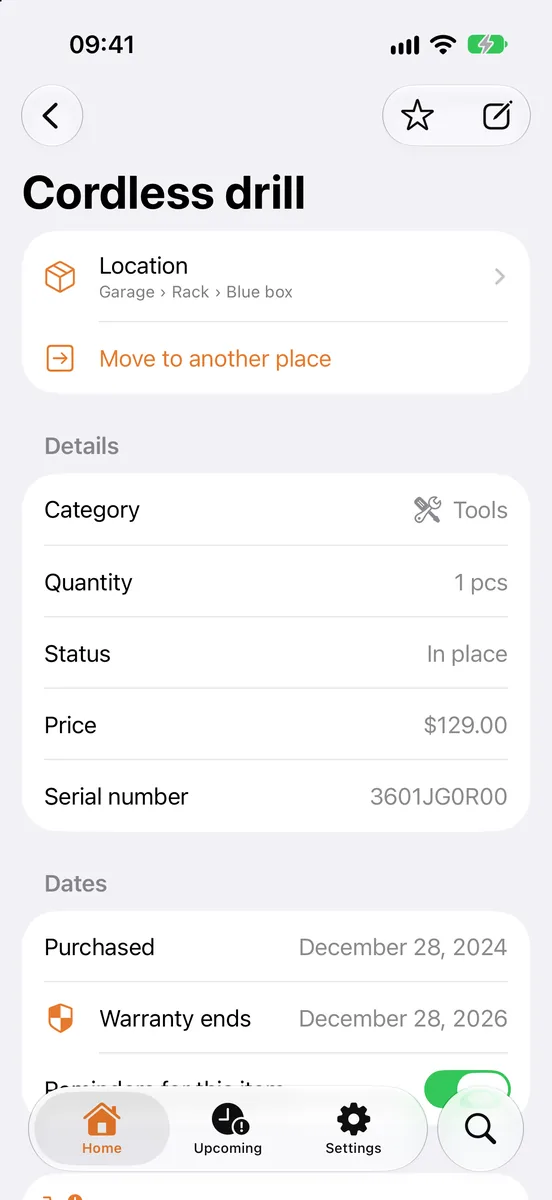
For stolen electronics, bikes and tools, the serial number does two jobs. It helps the insurer identify the exact model, and it lets the police match the item if it turns up. Many people only find out after a break-in that the serial number was printed on a box they threw away.
Write serial numbers down now for anything you'd hate to lose: laptops, phones, tablets, cameras, consoles, bikes, power tools.
Gathering proof for things you bought years ago
You don't need receipts for everything you own. You can rebuild a lot in an evening:
- Search your email for "order", "receipt" and "invoice", plus the names of big shops.
- Check your accounts with online shops: most keep years of order history.
- Look through your phone's photo library. Birthdays and holidays at home often show the TV, the sofa or the bike in the background.
- Download card statements for big months, like the month you moved in.
- Photograph the item now, with its label, and note roughly when you bought it and what it cost.
An estimate written down today is far more convincing than one remembered after a loss.
Where to keep it
Proof of ownership that lives in your home can burn or be stolen with everything else. Keep copies somewhere else:
- in your email or cloud storage;
- as an exported file (a spreadsheet or PDF) you update a few times a year;
- for very valuable items, with a family member too.
Doing it with Stowkeep
Stowkeep is a home inventory app for iPhone and Android, and an item card in it holds most of the proof in one place.
- Every item has a card: name, category, up to three photos, price, purchase date, serial number, barcode and warranty end date, plus a note for where the receipt is or what it cost.
- Photos as proof: one of the item where it lives, one of its label with the serial number.
- Scan a receipt and the items come back with prices and dates already filled in.
- Places show where it was: "Home › Living room › TV stand", which answers the "which room?" question straight away.
- Export to PDF or CSV, the whole home or chosen places, and keep the file outside the house.
The first 30 places and 100 items are free, enough to cover the valuables in most homes.
Quick checklist
- List the items you'd most hate to lose.
- Write down their serial numbers and photograph the labels.
- Search your email and shop accounts for old orders.
- Photograph each valuable item where it lives.
- Get valuations for jewellery, watches and art.
- Keep an exported copy outside the house and update it a few times a year.
FAQ
This guide is general information, not insurance advice. Check your own policy for what it requires.
How to make a home inventory for insuranceHow to make a home inventory your insurer will accept: what to record, photos, receipts and serial numbers, and how to keep it up to date in minutes.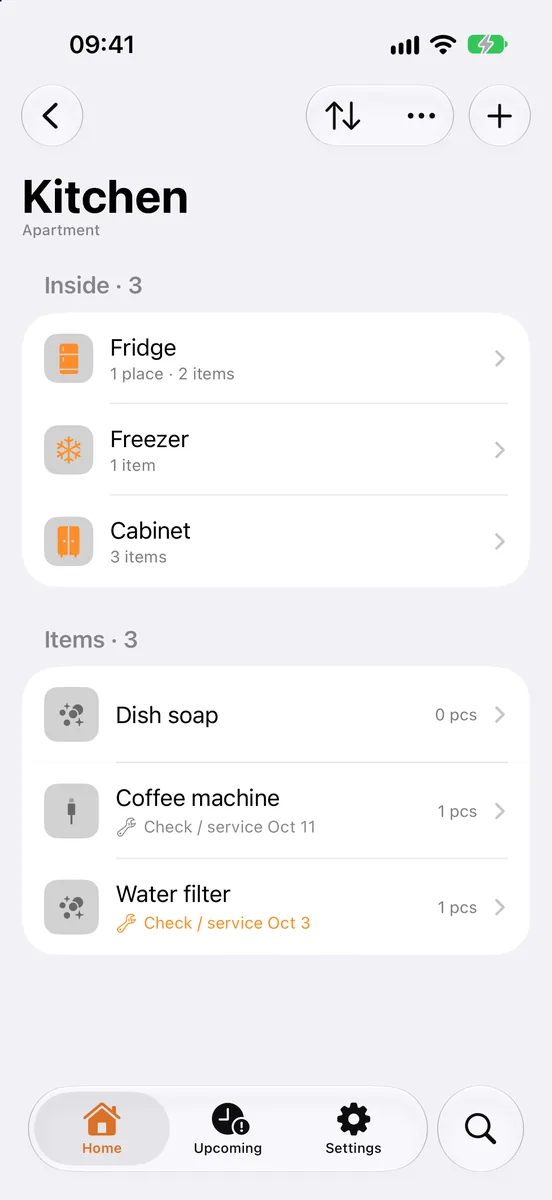 Moving inventory checklist: know what's in every boxA practical moving inventory checklist: number and label boxes, list what's inside, pack an essentials box and find anything after the move.
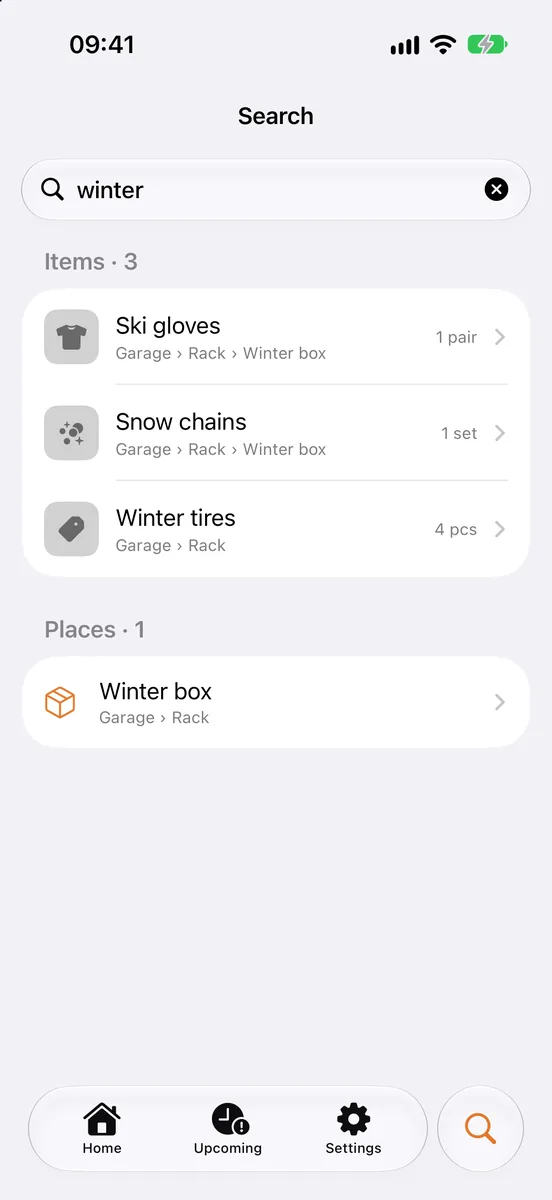 Garage organization that stays organizedOrganize your garage in zones, label shelves and boxes, track tools you lend out and service dates — and find any item in seconds instead of searching.